Product Description
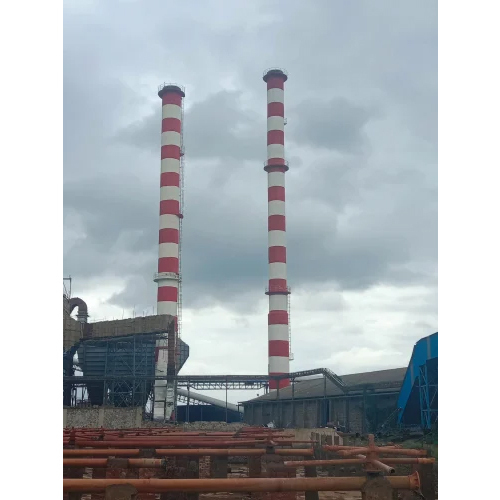
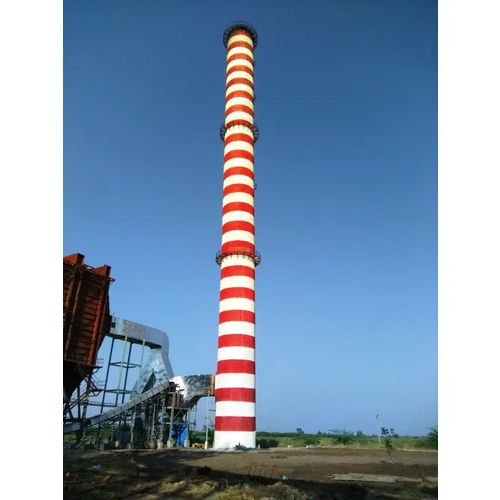
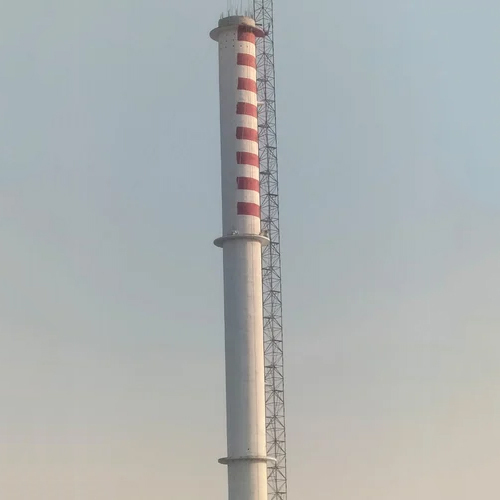
For industrial exhaust systems, the 120-meter RCC chimney construction is a strong, long-lasting structure. It is resistant to corrosive gases, high temperatures, and severe weather since it is made of reinforced cement concrete. By ensuring effective flue gas dispersion, this chimney lowers environmental pollution and complies with strict regulations. Because of its tall construction, which disperses pollutants at higher elevations, the air quality is improved. It has exceptional structural stability and seismic resilience, making it perfect for power plants, refineries, and large manufacturing complexes. It is an affordable option for industrial ventilation and pollution control because to its long service life and low maintenance needs.
Structural Engineering for Safety and ComplianceOur RCC chimneys are meticulously designed to withstand seismic forces and wind loads, ensuring compliance with IS 1893 and international standards like ASCE 7-10. The reinforced foundations and structural design give long-term stability, making these chimneys suitable for critical industrial emission points.
Advanced Emission Handling and MonitoringBuilt for flue gas temperatures up to 400C, our chimneys can integrate Continuous Emission Monitoring Systems (CEMS) for real-time regulatory compliance. Internal linings and anti-corrosive treatments offer added durability, while optional emission control devices help meet stringent emission norms.
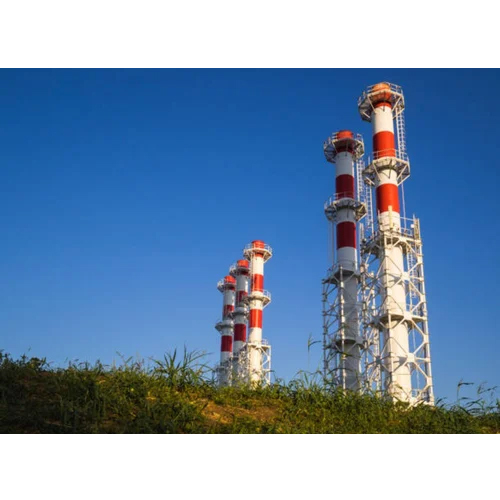
Customized Design and Efficient OperationEvery chimney is tailored to project-specific airflow, duct size, motor input power, and exhaust demands. High-efficiency motors and industrial centrifugal/axial fans ensure superior air handling. Additional features such as maintenance platforms, ladders, and control panels enable seamless operation and servicing.
FAQs of Tapered RCC Chimney Construction:
Q: How is the structural stability of the RCC chimney ensured during construction?
A: Structural stability is guaranteed through detailed engineering that addresses dynamic loads, site-specific wind and seismic forces, and foundation reinforcement. These designs comply with IS/ASTM/BS codes, with each chimney optimized for the projects dimensions and site conditions.
Q: What kind of internal and external protection is provided for the chimney?
A: The chimney can include an acid-resistant brick or block lining for internal protection against corrosive flue gases, while the external surface is coated with weather-resistant paint. Additionally, internal anti-corrosive treatment and smooth pipe finishes are available as specified.
Q: When should emission monitoring systems be integrated into the chimney?
A: Provisions for Continuous Emission Monitoring Systems (CEMS) are integrated during the chimneys construction phase, ensuring accurate, real-time tracking of emissions in compliance with regulatory standards from the moment of commissioning.
Q: Where can these RCC chimneys be installed?
A: These chimneys are ideal for industrial facilities across India requiring high-capacity emission venting, such as power plants, factories, or chemical manufacturing units, and can be exported for international use as well.
Q: What is the typical process for customizing the chimneys design parameters?
A: Customization begins with a thorough site and needs assessment, followed by engineering calculations for air flow, duct and pipe dimensions, exhaust capacity, noise constraints, and structural safety, all tailored to your facilitys requirements and regulations.
Q: How are the chimneys maintained post-installation?
A: Maintenance is facilitated by provided access platforms and ladders, allowing for safe inspection and servicing. The design includes robust coatings and easy access to key areas, helping ensure a long service life and effective operation with periodic checks.
Q: What are the key benefits of using a tapered RCC chimney for industrial emissions?
A: Key benefits include high durability, custom engineering for specific exhaust requirements, compliance with major safety and emission standards, integration of advanced emission controls, and a low-maintenance design that ensures reliable, efficient operation over time.









 Send Inquiry
 Send Inquiry
 Send SMS


 English
 Spanish
 French
 German
 Italian
 Chinese (Simplified)
 Japanese
 Korean
 Arabic
 Portuguese