उत्पाद वर्णन
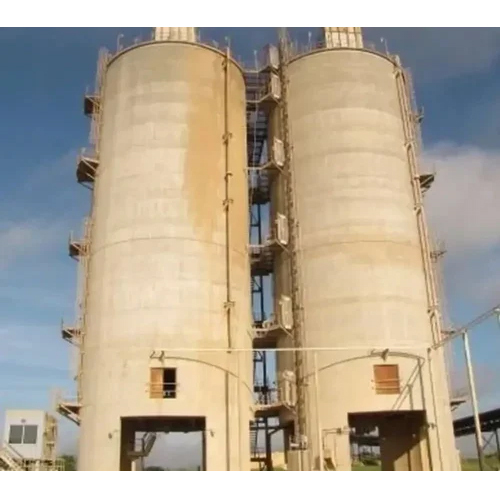
For reinforced cement concrete silos, the Slip Form Method RCC Silo provides a smooth and effective building method that guarantees consistent strength and longevity. By allowing for continuous concrete pouring, this technique preserves structural integrity while cutting down on labour expenses and construction time. These silos offer superior weather and corrosion protection, making them perfect for storing bulk goods like grains, cement, and minerals. Long-term dependability, lower maintenance costs, and increased load-bearing capability are among the advantages. For enterprises needing reliable and superior material storage solutions, the slip form technology optimises storage capacity and operating efficiency by guaranteeing smooth walls and precise dimensions.
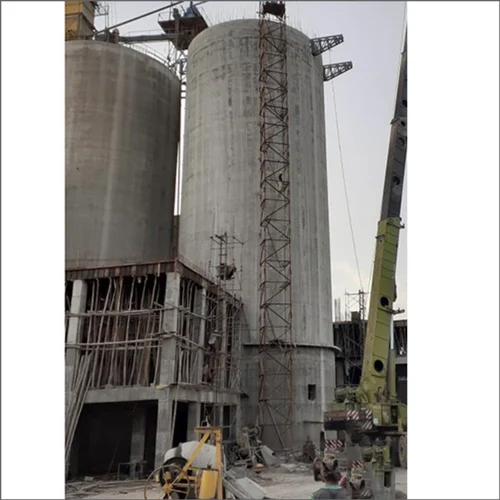
Continuous Slipform Construction for Maximum EfficiencySlipform silos are constructed using a continuous, upward-moving slipform system operated by manual or semi-automatic hydraulic jacking. This technique delivers rapid progress-typically 2 to 3 meters of vertical construction per day-producing seamless, monolithic walls suitable for storing high-capacity materials safely and efficiently. The result ensures a quick turnaround and robust design, reducing construction time and minimizing cold joints.
Engineered for Quality, Strength, and VersatilityDesigned with high tensile steel reinforcement and concrete grades from M30 to M60, these silos are tailored for exceptional compressive and tensile strength. Optional waterproof or anti-corrosive linings enhance durability, while their structure can be engineered for earthquake and wind resistance. The design suits extreme temperature ranges and varied foundation types, making these silos versatile for industrial storage applications.
FAQ's of Slip Form Method Rcc Silo:
Q: How is the slipform method used in RCC silo construction?
A: The slipform method involves continuously pouring concrete while gradually raising formwork panels using hydraulic jacks. This allows the structure to rise steadily-about 2 to 3 meters per 24 hours-producing a seamless, monolithic cylindrical silo.
Q: What are the main benefits of using the slipform technique for silo construction?
A: This method offers rapid construction, high structural strength, and a smooth joint-free finish. It also reduces the risk of cold joints and allows for customizable dimensions, making it highly efficient and reliable for large storage requirements.
Q: When should slipform construction be preferred over other methods?
A: Slipform is ideal when building tall, large-diameter silos that require quick completion, high strength, and minimal maintenance. It is especially suitable for projects demanding continuous pouring and seamless vertical structures.
Q: Where can these slipform silos be installed?
A: Slipform RCC silos can be constructed at industrial sites across India-wherever bulk storage for cement, grain, fly ash, clinker, or similar materials is required. They are suitable for regions demanding earthquake and wind resistance.
Q: What is the process for reinforcing slipform RCC silos?
A: High tensile steel bars, compliant with IS or Euro codes, are placed according to structural design. The reinforcement is installed as the slipform progresses, ensuring uniform support throughout the height of the silo.
Q: How is maintenance managed for slipform RCC silos?
A: These silos require minimal upkeep due to their smooth interiors and exteriors. Routine inspections and surface cleaning are straightforward, ensuring longevity and sustained structural integrity.
Q: What optional features or customizations are available with these silos?
A: Options include waterproof and anti-corrosive linings, variable bottom designs (flat, conical, hopper), and diameter or height adjustments. Automation level, power source, and color or finish can also be tailored to project needs.